Innovative adaptation
for resilient coastal
communities
HARCCA is an EU innovation project that aims
to strengthen climate resilience in Europe’s
most vulnerable coastal regions.
Why HARCCA
European coastlines are facing unprecedented climate-related events such as flooding and erosion, inundation, groundwater rise and salinisation, and saltwater intrusion.
Southern Europe, low-lying coastal zones and Europe’s outermost regions have been identified as priority hotspots. Each faces increasing risks that could harm people’s livelihoods, damage infrastructure and disrupt ecosystems. To prevent ongoing loss and safeguard communities, HARCCA will assess risk, model solutions and support communities with adaptation approaches that can be replicated across Europe.
 3.2MPeople exposed
to coastal flooding
by 2100
 +1.5°CRegional sea
surface warming
since 1993
 +30–60cmSea level rise
projected by
2100
How HARCCA works
HARCCA focuses on implementation rather than research alone.
Across eight living labs, the project will:
Co-design
strategies

Model and
assess risks

Evaluate effective
measures

Scale and
replicate

Meet the HALLs: Europe’s coastal adaptation hotspots
Hotspot Adaptation Living Labs (HALLs) are based in different soft coasts across Europe including reefs, lagoons, peninsulas, islands and deltas. Each faces its own localised challenges, from rising sea levels and coastal erosion to flooding and groundwater salinisation.
Five demonstrator Labs are developing and modelling these approaches in depth, while three replicator Labs assess how they could be adapted and applied elsewhere.
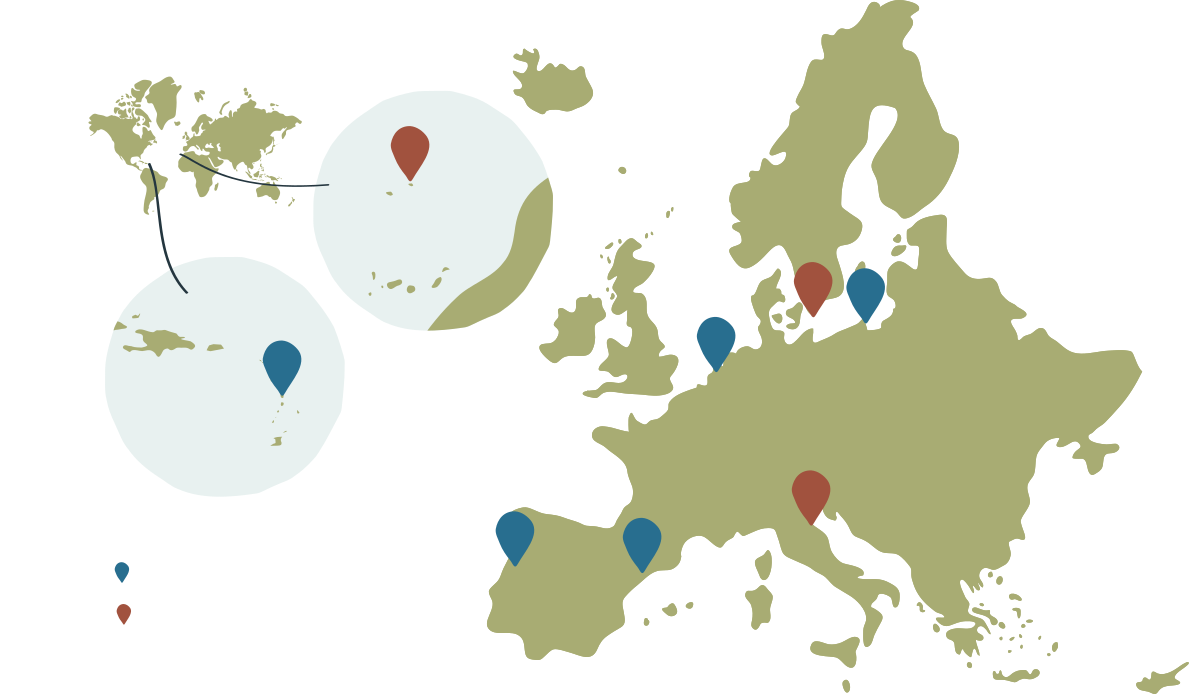 Porto Santo
Martinique
Ria de Aveiro
Llobregat Delta
Coast of NW Netherlands
Hel Peninsula
Ravenna
Trelleborg
DemonstratorReplicator
Porto Santo
Martinique
Ria de Aveiro
Llobregat Delta
Coast of NW Netherlands
Hel Peninsula
Ravenna
Trelleborg
DemonstratorReplicator